
Polydactyl Maine Coons: More Than Just Extra Toes - History, Genetics, Health
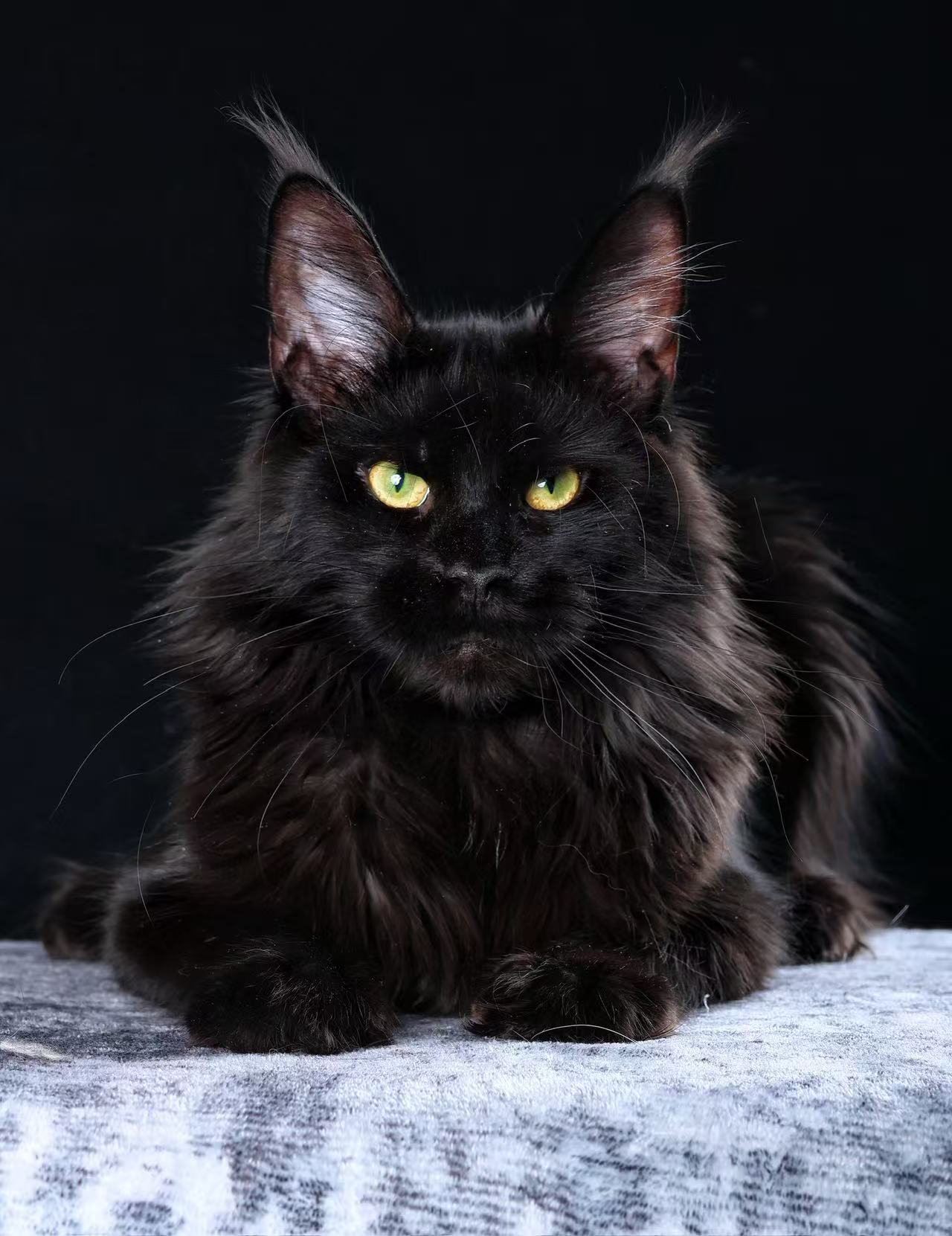

If you have ever seen a polydactyl Maine Coon, the first thing you probably noticed was the paws.
Some look like they are wearing oversized mittens. Others have broad, round feet with extra toes lined neatly beside the others. For many people looking for a Maine Coon kitten, those unusually large paws are one of the most memorable features of the breed.
But a polydactyl Maine Coon is more than simply a Maine Coon cat with “extra toes.” Polydactyly has been present in the breed for generations and remains an interesting part of Maine Coon history, genetics and preservation breeding.
So what exactly makes a polydactyl Maine Coon kitten, how is the trait inherited, and does having extra toes create health problems?
What Is a Polydactyl Maine Coon?
A typical cat has 18 toes: five on each front foot and four on each rear foot.

A polydactyl Maine Coon, often called a “poly,” is born with one or more additional toes. The extra digits may appear on the front paws only or on multiple feet, and the number and shape of those toes can vary considerably from one Maine Coon kitten to another.
Some poly paws have a distinct extra digit on the inside of the foot that resembles a thumb. Others are simply much wider than a standard Maine Coon paw.
That variation is one reason two related polydactyl Maine Coon kittens may inherit the same general trait while having very different-looking feet.
Where Did Polydactyl Maine Coons Come From?
Polydactyly is not a newly created feature of the modern Maine Coon.
The Maine Coon developed in the northeastern United States, where polydactyl cats were historically found among working cats and cats living around ports and ships.
There is a popular story that the wide paws of these cats acted like natural “snowshoes,” helping them move through the snowy Maine winters. It is a wonderful part of Maine Coon folklore, although we cannot say scientifically that snow was the reason the trait survived.
What we do know is that polydactyl cats existed in the historical population from which the modern Maine Coon developed.
Today, the trait is still preserved by some Maine Coon breeders rather than being treated as a newly introduced characteristic.
TICA officially recognizes the Maine Coon Polydactyl, abbreviated MCP, within the Maine Coon Breed Group
How Is Polydactyly Inherited?
Polydactyly in Maine Coons is primarily inherited as an autosomal dominant trait.
In simple terms, a polydactyl Maine Coon kitten normally needs to inherit the poly-associated gene variant from at least one parent.
For example, when a typical heterozygous polydactyl Maine Coon is bred to a non-polydactyl Maine Coon, each kitten may have approximately a 50% chance of inheriting the trait.
That does not mean half of every litter will always be poly. Genetics work individually for each kitten, so one litter might have several polydactyl Maine Coon kittens while another may have very few.
The number of extra toes is also not predictable simply by looking at the parents.
A parent with one obvious additional toe can produce a kitten with a much broader poly paw, while another kitten may show the trait much more subtly.
This is called variable expression.
Is a Polydactyl Maine Coon a Health Problem?
This is probably one of the most common questions we hear about poly Maine Coons.
Having extra toes by itself is not considered a disease.
Research examining polydactyl Maine Coons has found differences in the bones of the digits and, in some cats, differences involving the carpus or tarsus—the equivalent of the wrist and ankle.
However, these anatomical differences do not automatically mean that a polydactyl Maine Coon will develop orthopedic disease.
Researchers studying Maine Coon polydactyly have not found evidence that the trait generally causes poor welfare or prevents normal skeletal development.
That distinction is important.
A polydactyl Maine Coon kitten can have different foot anatomy without being an unhealthy kitten.
What About Carpal Laxity?

Breeders sometimes discuss carpal laxity, or a softer/looser appearance through the wrist, in growing Maine Coon kittens.
Because polydactyl Maine Coons may have additional or differently shaped bones around the paw and carpus, we pay attention to leg and paw development as a poly kitten grows.
However, it would be too strong to say that polydactyly itself causes carpal laxity.
At this time there is not enough published evidence to say that every poly Maine Coon—or even most poly Maine Coons—is more likely to develop clinically significant wrist problems simply because of the extra toes.
As breeders, we prefer to evaluate the whole cat: structure, movement, hips, heart, genetics, temperament and overall health rather than judging health from toe count alone.
Different Types of Polydactyl Paws
Not every polydactyl Maine Coon has the same type of paw.
One of the most recognizable forms is often described as a mitten paw. An extra digit sits toward the inside of the paw and can resemble a thumb, giving the foot the appearance of a
mitten.
Another appearance is sometimes called a patty foot or snowshoe-style foot. Instead of one obvious “thumb,” the additional digits make the entire paw wider.
You may also hear names such as Hemingway polydactyl, American polydactyl or Canadian polydactyl.
These terms can describe historical populations, genetic lines or different presentations of polydactyly, but they should not all be treated as completely separate “breeds.”
The famous Hemingway cats of Key West are probably the best-known polydactyl cat population in the United States.
Genetic research has also identified different variants associated with polydactyly, including differences between some American-origin and Canadian Maine Coon populations.
So even within the polydactyl Maine Coon, there is more genetic diversity than simply “poly or non-poly.”

Can Polydactyl Maine Coons Be Shown at Cat Shows?
This is where things become especially interesting because different cat registries treat the trait differently.
CFA
Under the current Cat Fanciers' Association (CFA) Maine Coon show standard, a standard Maine Coon should have five toes on each front foot and four on each rear foot.
An incorrect number of toes is listed as a disqualification. Therefore, a polydactyl Maine Coon cannot compete as a Maine Coon in normal CFA breed competition.
However, this does not mean that CFA considers every polydactyl Maine Coon to be a mixed-breed cat.
CFA registration rules specifically provide registration for polydactyl Maine Coons, including dedicated polydactyl registration codes introduced in 2023.
In other words:
Show eligibility and pedigree registration are two different things.
A Maine Coon can be a registered, pedigreed polydactyl Maine Coon and still be ineligible for CFA breed competition because the show standard does not permit extra toes.
TICA
TICA takes a different approach.
The International Cat Association (TICA) recognizes the Maine Coon Polydactyl as MCP, alongside the traditional Maine Coon, MC, within the Maine Coon Breed Group.
Polydactyl Maine Coons have been eligible for TICA Championship competition since 2015.
This means a polydactyl Maine Coon can be shown and judged against the TICA Maine Coon Polydactyl standard.
For people interested in Maine Coon cat shows, understanding the registry matters just as much as understanding the cat itself.
Should You Choose a Polydactyl Maine Coon for Bigger Size?
A polydactyl Maine Coon is not automatically a bigger Maine Coon. The extra toes can make the paws look wider and more impressive, but polydactyly itself does not make the cat larger, heavier, or more substantial overall.
For that reason, we do not recommend choosing a polydactyl Maine Coon simply because you are looking for the “biggest” cat or the largest paws. Outside of the extra toes and paw structure, a poly Maine Coon is still a Maine Coon just like any other.
Temperament, body size, structure, health, and overall breed type matter much more than whether a kitten has extra toes. Polydactyly can be a beautiful and historic trait, but it does not make one Maine Coon better than another.
Why Does CoonSpire Include Polydactyl Maine Coons?
At CoonSpire, we did not add polydactyl Maine Coons to our breeding program simply because large paws look impressive.
For us, poly represents an interesting historical part of the Maine Coon breed that we would like to preserve thoughtfully.
But being poly never makes a cat automatically suitable for breeding.
A breeding cat still needs to meet the same priorities we have for every Maine Coon in our program: health, temperament, sound structure, genetic diversity and Maine Coon type.
We are also not interested in breeding for increasingly extreme numbers of toes.
More toes do not make a better Maine Coon.
Our goal is simply to preserve the polydactyl trait while continuing to evaluate the entire cat.
When we plan a litter that may include a polydactyl Maine Coon kitten, the paws are only one piece of the picture.
The kitten still needs everything else we want in a CoonSpire Maine Coon: good structure, a stable temperament, appropriate health screening behind the pedigree and the unmistakable character that makes us love this breed.


Comments